Mastering the Skies: The IAS Story
In the early 2010s, the drone industry was at a tipping point. Unmanned aircraft were evolving rapidly from hobbyist model planes into sophisticated tools capable of carrying advanced sensors and gathering data at scale. While many early adopters focused on film and media verticals, the founders of Integrated Aerial Systems (IAS) saw a different opportunity: using drones to solve complex operational problems in various industries. Founders Dexter Tangocci and Warren Witte speak on professionalising the skies and building a sustainable drone business in Cape Town:
Please explain your company’s product and/or services in a nutshell.
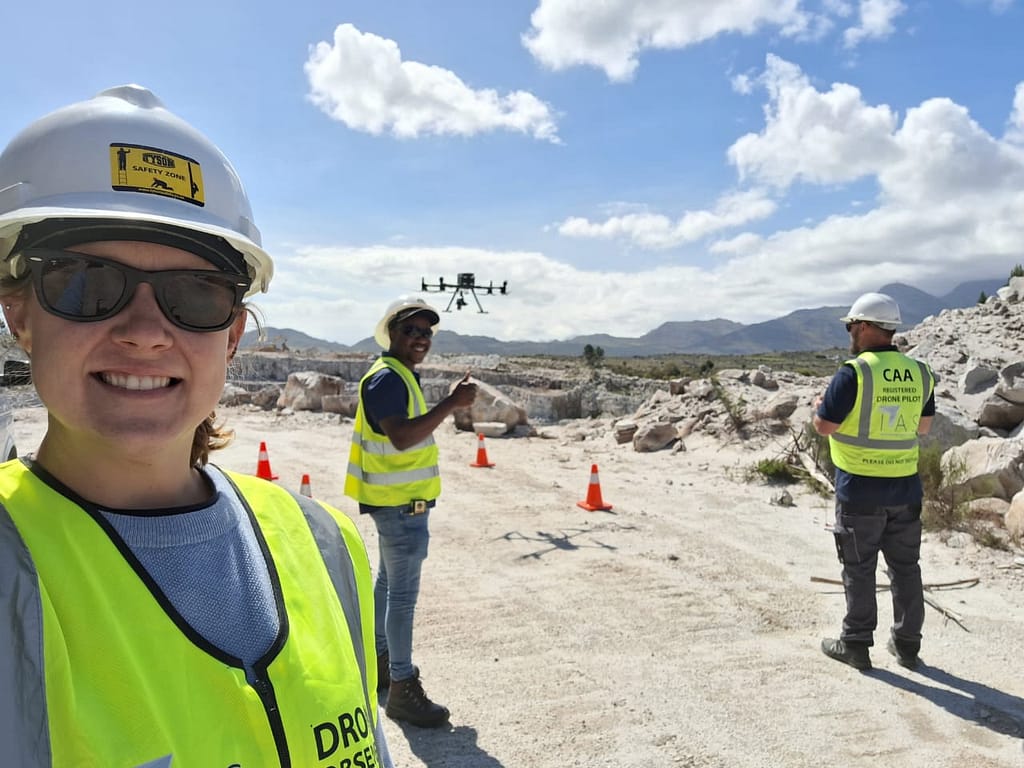
We are a licensed and SACAA-registered drone service provider offering end-to-end aerial data capture, security, and compliance solutions. We operate across multiple industries, delivering practical insights derived predominantly from drone-based aerial data to help organisations work more efficiently, manage risk, and make informed operational decisions.
Our work spans surveying and mapping, environmental and urban assessments, infrastructure and asset inspections, crop spraying, and drone-based security and public safety operations. We also support organisations that wish to integrate drones into their own operations by managing the regulatory and compliance requirements on their behalf.
What made you choose to start a company in this industry?
From the early 2010s, we watched drones evolve from simple model aircraft into highly capable tools equipped with advanced sensors, GPS, and reliable flight-planning software. For the first time, unmanned aircraft available to civilians could gather accurate, repeatable data at scale.
When South Africa introduced Part 101 of the SACAA Regulations in 2015, it provided the regulatory foundation needed for commercial drone operations. We believed this was the final piece required for a sustainable industry to develop. At the time, most licensed operators focused on film and media, but we saw a broader opportunity.
We chose to start IAS because we recognised that drones could solve real operational problems across multiple sectors. That multi-industry approach has shaped the way we have built the company from the start.
What are your biggest challenges and how are they being addressed?
Regulatory barriers
South Africa has one of the most stringent regulatory environments for commercial drone operations globally. Even as a fully licensed operator, maintaining compliance requires significant time, administration, and cost. Any changes to our operating environment, such as new permissions, expanded services, or additions to our drone fleet, require formal approvals that can take several months. For example, a new drone cannot be deployed immediately after purchase. It must first be registered, licensed, and onboarded onto our operating certificate, which typically takes 8 to 12 weeks.
We address this through careful forecasting and long term planning so that our operational needs align with approval timelines. We also participate actively and constructively in industry associations and engagements with the Regulator to support regulatory improvements that will benefit the sector as a whole.
Capital constraints
The drone industry is highly capital intensive. Drones, sensors, batteries, and computing hardware depreciate quickly and are often priced at levels similar to vehicles. Despite this, most banks do not offer traditional financing for drones, meaning acquisitions are usually funded directly from cash flow.
We are addressing this by engaging with financial institutions to help develop appropriate financing products for drones and sensors. Internally, we manage our growth conservatively, expanding our fleet only when supported by project demand and cash flow.
Human resource constraints
Operating across multiple industries means our team requires a broad and diverse range of skills. Specialists in surveying, inspections, agriculture, and security are often trained for only one or two of these fields, which can make multi-industry operations challenging.
We manage this through structured training, strong SOPs, and hands on experience across different sectors. We invest in upskilling our team so that they can work confidently across the full spectrum of our services. Our retention has been strong, which we attribute to the quality of the work, the learning environment, and a company culture that supports professional growth.
What advice would you give to other businesses facing similar challenges?
Every business has its own context, but a few principles have helped us navigate the complexities of operating in a highly regulated and capital-intensive industry.
The first is to plan ahead as far as possible. Regulatory processes, capital cycles, and staffing requirements often move slower than expected, so building long lead times into your planning makes a meaningful difference. It also helps to stay engaged with your industry and its regulators. Constructive participation in working groups and industry associations gives you early visibility of changes and allows you to contribute to solutions rather than simply react to them.
In a fast-changing environment, long-term success depends on consistency, adaptability and patience. Build your operations around solid forecasting and realistic timelines, especially where regulatory approvals are concerned. Invest early in systems, training and processes that help your team operate reliably across different sectors and conditions.
Most importantly, persevere. The regulatory landscape, technology and market needs will continue to evolve, but businesses that remain flexible and stay engaged tend to find the opportunities in that change.
What is the most valuable lesson you have learned as a business owner?
We’ve learnt that progress is rarely straightforward. Most things take longer, cost more, and are more complex than expected, so resilience and determination become essential. Over time, you learn to stay focused, adapt quickly, and keep moving forward even when the path is tougher than anticipated.
Why choose Cape Town as a location for your operations?
Both founders were born and raised in Cape Town, so building the company here was a natural decision. Cape Town is also one of the most reliable and well run metros in the country, with municipal services, safety, and day to day operations that function more consistently than elsewhere in South Africa. That stability creates a predictable environment in which businesses can plan, invest and grow with confidence.
We also feel supported by the local government. The City actively engages with industry and makes it clear that businesses are valued partners in economic growth. This makes a meaningful difference in how companies operate and expand.
Cape Town is one of the fastest growing local economies, and the demand for the services we offer is strong and increasing. While we work across South Africa, our home base in Cape Town gives us access to a dynamic market, strong talent, and clients who are open to adopting technology driven solutions.
What is your company’s unique selling proposition?
Over the past eight years, we have worked consistently to build one of the strongest regulatory foundations in the country. IAS holds the most comprehensive SACAA-issued operating certificate (UASOC) currently issued in South Africa. This includes approvals for long-range beyond visual line of sight operations up to 25 km, operations in controlled and restricted airspace, flights over people and public roads, night operations, drop and release, delivery, crop spraying and authorisation to operate over national key points. We are also a registered security service provider with PSiRA.
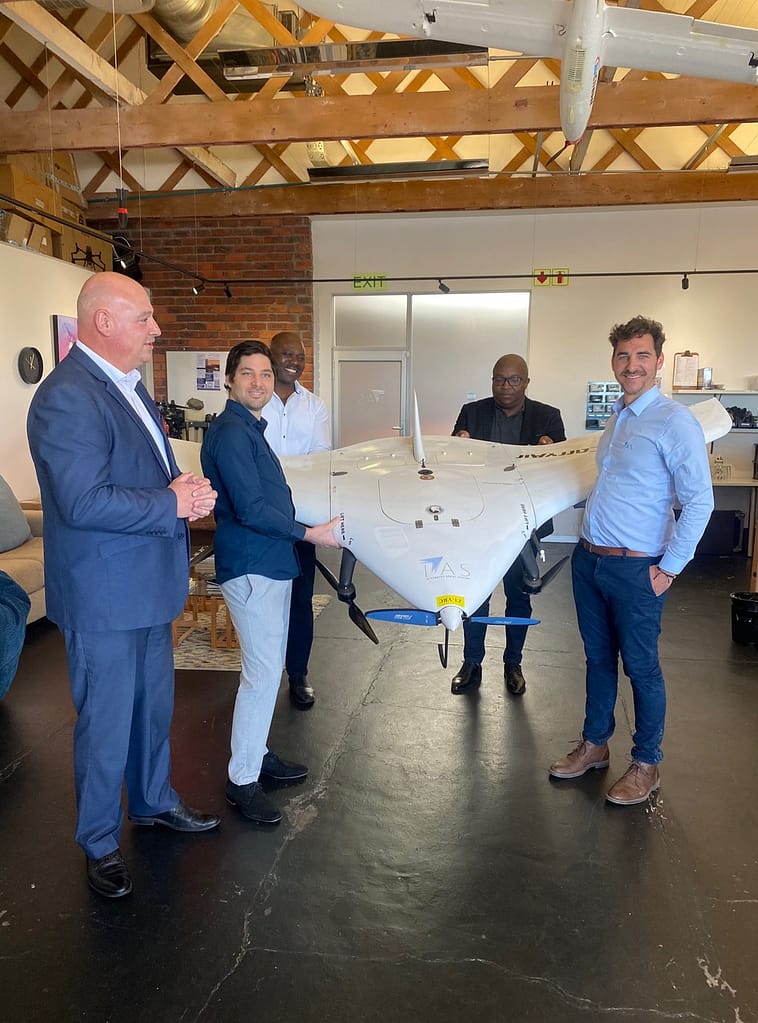
These approvals give us a clear operational advantage. We can fly in environments where many operators cannot, and we can support clients whose operations require advanced permissions. This extends to our Flight Managed Services Programme, where we operate and manage drone fleets on behalf of organisations that want to use drones internally but need the legal and operational backing of a fully licensed operator.
In addition to our regulatory capability, we offer a genuinely end-to-end service. Our work covers data collection, processing, analytics and reporting. We have an in-house geospatial team, including registered land surveyors, which allows us to execute complex projects with a high level of technical depth and accuracy.
The combination of advanced regulatory approvals, strong operational capability and a full analytics pipeline allows us to offer one of the broadest and most integrated service offerings of any drone operator in South Africa.
What are your company’s biggest achievements to date?
We are proud of how far IAS has come since starting as a two-person operation. We have built a sustainable, multi-industry drone services business without external investment, grown our team significantly, and developed one of the most comprehensive client portfolios in the sector. Securing one of the most capable UAS Operating Certificates (UASOC) in South Africa has been another major milestone, enabling us to operate in environments and scenarios that most operators cannot.
We have also been recognised on the continental and global stage, including being finalists in the GoGettaz Agripreneur Competition and the African Drone Business Challenge in 2020, and winning the United Nations “Best Small Business: Good Food for All” competition in 2021.
In addition, we continue to expand our technical capacity, strengthen our geospatial and analytics capabilities, and successfully execute increasingly complex projects across the country. For us, sustained growth, continuous improvement, and the trust of our clients remain our most meaningful achievements.

What is your company strategy for growth and expansion?
Our growth strategy centres on sustainably expanding our team and our fleet of drones, sensors and specialised equipment. The demand for high quality drone services in South Africa is stronger than ever and continues to grow, and we intend to meet that demand by scaling in a responsible, well-managed way.
A key part of this expansion is the shift toward Remote Drone Operations. This approach allows us to deploy drone-in-a-box systems at fixed sites around the country and operate them remotely from a central control room. IAS is already approved by the SACAA to conduct remote operations, and we have been steadily building the systems, infrastructure and procedures needed to support this capability.
Remote operations reduce the need to send pilots into the field for routine or time-sensitive missions, making monitoring, security and data collection faster, more efficient and far easier to scale. They also allow us to offer customers continuous coverage, rapid response and consistent, high quality data without the logistical constraints of traditional deployments.
By growing our team sustainably, investing in the right equipment, and expanding our remote-operations capability, we are building a solid foundation for long-term growth.
How do you measure success in your business?
We track the usual business metrics such as revenue growth, profitability, and the expansion of our team and technical capacity. These are important indicators of whether the business is healthy and moving in the right direction.
But the real measure of success for us is the impact of the work itself. We operate across sectors where accurate data, reliable operations and strong compliance can materially influence how organisations plan, respond and make decisions. The most meaningful indicator of success is whether our work is genuinely helping clients solve problems, improve efficiency, enhance safety or unlock new capabilities.
A practical example is our work in the solar PV industry. We have inspected thousands of megawatts of solar capacity across utility-scale, commercial and industrial sites. The data we produce helps operators identify underperforming modules early, improve system output, and ensure their plants are generating power as close to optimal capacity as possible. This has a direct impact on energy availability, investment returns and the long-term reliability of green energy infrastructure. Our work also supports broader energy resilience at a time when South Africa’s power system has faced significant pressure.
If the data we deliver drives better outcomes and the services we provide make a measurable difference in the industries we operate in, then we consider that success.
What are the company’s plans for the next 5 years?
Over the next five years, our primary focus is on increasing automation across our operations. This begins with expanding our drone-in-a-box deployments and scaling our remote operations capability, enabling us to deliver security, monitoring and data-collection services with greater consistency, speed and efficiency.
We also plan to build more automation into our data-processing and analytics workflows. As the volume and complexity of aerial data grows, more automated pipelines will allow us to deliver faster turnaround times, deeper insights and more consistent outputs for our clients.
A core part of our strategy is to significantly scale our operational capacity. We aim to grow our fleet from roughly 130 drones to more than 1 000, supported by the largest remote-operations network in South Africa. This will allow us to service more sites simultaneously, respond faster to operational needs, and support customers who require continuous coverage or high-frequency data collection.
We intend to pursue this growth in a sustainable way by expanding our team, investing in the right technical infrastructure, and strengthening the systems needed to support long-term scale. While South Africa remains our primary market, we also see practical opportunities to extend our remote-operations model into selected regions of Africa where there is strong demand for reliable aerial data and monitoring services.
Our goal is to build a business capable of delivering high-impact, dependable services at national scale, while remaining agile, compliant and grounded in strong operational principles.