Investment Opportunities in Cape Town
Cape Town does not try to be everything to everyone. It wins because it does a few things exceptionally well, and it keeps building on them. Below is a sector-by-sector view of where the investment opportunities in Cape Town sit.
If you’re looking for a city where investment has a clear runway (strong sectors, real demand, and practical support), you’ll see that Cape Town is a serious contender. And not just for “future potential”. For right now.
Skip ahead: InvestSA One Stop Shop
Why Cape Town keeps showing up on investor shortlists
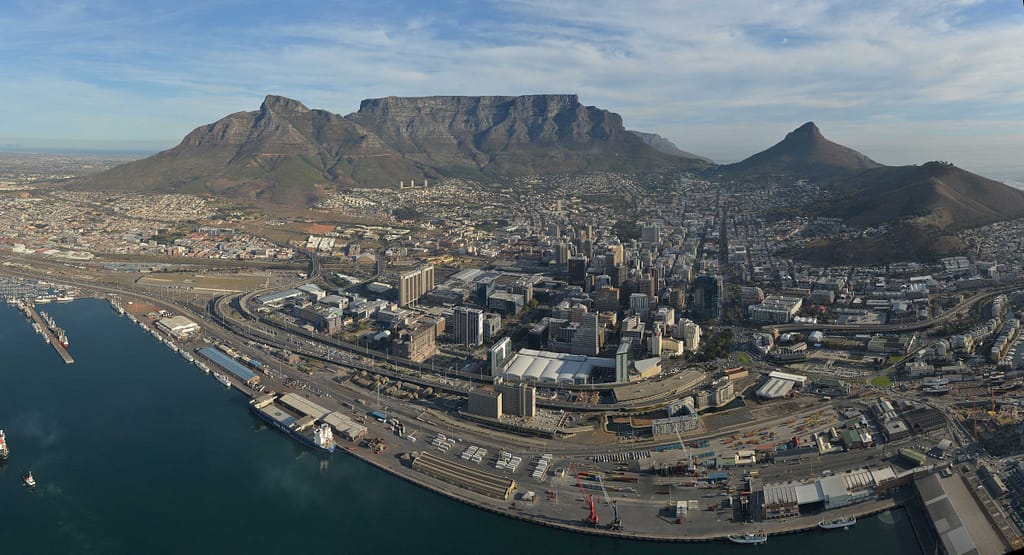
Cape Town offers foreign investors a combination that is difficult to replicate elsewhere in Africa: physical access to global markets, strong commercial infrastructure, and a city government that actively works to reduce friction for business.
- The Port of Cape Town provides a direct trade gateway linking Europe, the Americas and the rest of Africa, supporting both export-oriented manufacturing and import-driven supply chains.
- Cape Town International Airport connects the city to major global hubs, enabling the smooth movement of people, high-value goods and services.
- On the ground, investors benefit from well-developed road, fibre and utilities infrastructure, established industrial and commercial nodes, and access to a deep professional services market.
- Just as importantly, the City of Cape Town has positioned itself as a pro-business partner, investing in energy resilience, streamlining permitting processes, supporting sector clusters, and working closely with agencies like Wesgro to help investors navigate regulations, site selection, incentives and expansion.
The result is a location where foreign businesses can set up, scale and operate with greater certainty, speed and long-term confidence. Add to it a market with depth, talent, and momentum, and you have an investment opportunities ecosystem second to none.
Cape Town’s opportunity set is not one monolithic story. It’s a spread across manufacturing capability, high-growth tech clusters, globally traded services, and a visitor economy that keeps reinventing itself. And crucially: you can invest in Cape Town in more than one way; from direct investment in established firms, to early-stage plays, to joint ventures, to greenfield expansion, to real estate that supports industrial and commercial growth.
So, let’s get into the sectors.

1) Tech investment opportunities: Build here, support from here, scale from here
Cape Town’s tech economy is not a side hustle. It is one of the city’s strongest investment narratives. This is because it combines a strong startup base, skilled talent, and real commercial demand across South Africa and the continent.
FINTech: Where financial muscle meets product innovation
Cape Town has a fintech ecosystem with real breadth: payments, B2B infrastructure, insurtech, lending, investments, savings, and more.
Where the investment opportunities are
- Payments and transaction infrastructure: Cape Town is strong in payment innovation, including solutions that make moving money cheaper and easier, particularly relevant for remittances across the SADC region.
- B2B fintech infrastructure: Platforms that help banks and financial institutions modernise customer experience, product design, compliance, and internal processes remain a major growth segment.
- Partnership-driven scale: One practical advantage is how fintechs collaborate with incumbents through partnerships and equity stakes, which can reduce go-to-market friction and speed up adoption.
What to back
- Platforms that solve cashflow realities (SME enablement, merchant payments, credit scoring using alternative data).
- B2B rails that reduce operational cost or increase speed (verification, onboarding, risk, underwriting support).
- Insurtech models that simplify claims, pricing, and customer experience.
Cape Town has a strong local community of fintech pioneers. This includes players like Yoco, Ozow, Bank Zero, and Naked Insurance, which signals ecosystem maturity and deal-flow depth.
Gaming: Content, tooling, and services around a fast-growing market
Cape Town hosts more than 50% of South Africa’s game development studios, which matters because clusters attract skills, suppliers, and repeat success.
The wider African gaming market is forecast for strong growth (including projections cited via Statista), and Cape Town’s mix of creative and technical capability makes it investable beyond just “studios”.
Where the investment opportunities are
- Game studios and co-development (especially export-focused IP and service studios)
- Production ecosystem services: recording, post-production, concept art, animation, scripting, engineering talent
- Events and deal networks: Africa Games Week in Cape Town functions as a convening point for developers, investors, and partners.
What to back
- Studios with repeatable production pipelines and international distribution pathways.
- Service providers that sell into global production demand (audio, animation, QA, tooling, outsourcing).
- Training and talent-development models that feed the pipeline (especially specialised disciplines).
EdTech: Solutions built for access, outcomes, and scale
Cape Town is becoming a hub for EdTech, driven by startups, institutions, and ecosystem support. Solutions increasingly use AI, VR, and personalisation.
Where the investment opportunities are
- Accelerated venture-building: Cape Town is home to Injini, an EdTech accelerator that has supported dozens of African EdTech startups and helped them reach millions of learners and teachers.
- Global-scale course platforms: GetSmarter’s global partnerships and its acquisition point to the international ceiling for Cape Town-built EdTech.
- Facilities and learning infrastructure: Invest Cape Town notes Construct’s investment in a digital learning facility in Cape Town as part of expansion into Africa.
What to back
- Skills development platforms aligned to employment pathways (bootcamps, short courses, workforce readiness).
- B2B learning platforms for enterprises with compliance, performance, and training needs.
- Tools that address access constraints (offline capability, low-data design, mobile-first learning).

2) Creator economy: Creative output with commercial infrastructure
Cape Town’s creator economy story is the next step beyond “culture”. It is production capability, services infrastructure, and exportable creativity, with film and media as the anchor.
Film & Media: A production hub with proven economic impact
Cape Town has positioned itself as a major destination for African and international productions, backed by City-industry collaboration (including Film Cape Town).
A City-commissioned study in 2023 indicated the film and media sector in Cape Town contributes approximately R5 billion annually and has created more than 35,000 jobs.
Where the investment opportunities are
- Production services and infrastructure: studios, facilitation companies, specialised crews, and location libraries are part of the city’s edge.
- Scale and throughput: the City Film Permit Office issuing thousands of permits and bookings over a 12-month period signals a steady pipeline of work.
- Studio capacity: Cape Town Film Studios is positioned as a major high-tech studio complex in sub-Saharan Africa, with significant economic impact and job creation over its first decade.
What to back
- Production infrastructure: sound stages, post-production, VFX, animation, rendering farms.
- Crew development and specialist training: lighting, grips, production management, post.
- Services that reduce production friction: equipment rental, location services, permitting support tooling.
Informal economy: Inclusive growth and enabling infrastructure
This is a different kind of opportunity, but it matters if you invest with an inclusive growth lens. The informal economy’s role in livelihoods and employment is estimated at 28% of South Africa’s GDP.
With City programmes that support informal traders, plus a Council-approved budget aimed at strengthening this part of the economy, such as expanding e-permitting and upgrading trading infrastructure, this is an investment opportunity worth noting.
Where the investment opportunities are
- Digitisation and services that help informal businesses trade more efficiently (payments, permitting, supply access).
- Infrastructure upgrades in trading areas (where public budgets create enabling conditions).
- Aggregation models that connect informal supply to formal demand.

3) Business services: Exportable capability, repeatable delivery
Business services are one of Cape Town’s most investable categories because they sell beyond the city, and into global markets.
BPO: A global services engine with proven growth
In the Western Cape, the Business Process Outsourcing (BPO) sector grew substantially over the past decade, with job growth from around 4,000 (2011) to over 42,000 (2021). Cape Town is an offshore outsourcing hub and offers coordinated support across government and industry bodies like CapeBPO.
Where the investment opportunities are
- New operations and expansions: Cape Town’s talent pool, time-zone alignment with Europe, and infrastructure are repeatedly cited as advantages.
- CX plus tech hybrid models: Cape Town’s BPO strength includes blending digital efficiency with human-led customer experience, which is where higher-value contracts tend to sit.
What to back
- Mid-to-high complexity customer operations (tech support, financial services, travel, ecommerce).
- Specialised vertical BPO (healthcare admin, fintech support, claims management, back-office finance).
- Workforce training and talent pipelines that reduce ramp-up time and improve quality.
Visitor economy: Tourism, yes — but also infrastructure and services
Cape Town’s visitor economy is not just leisure travel – which is significant. It includes convention centres, hotels, operators, restaurants, attractions, and enabling bodies.
With measurable performance at key attractions (Cape Town’s “Big Six”), Cape Town’s visitor economy logged over 11.1 million two-way passengers in 2025, according to Airports Company South Africa (Acsa) that manages Cape Town International Airport.
Where the investment opportunities are
- Eco-friendly accommodation (green hotels and lodges)
- Infrastructure and transport (including sustainable connectivity solutions)
- Community-based tourism projects
- Technology and innovation that improves visitor experience and supports sustainability
Add to that the practical air and cruise connectivity initiatives (Cape Town Air Access and Cruise Cape Town), which support visitor flows and trade logistics, and you have a clear investment opportunity.
What to back
- Sustainable hospitality models that match changing traveller expectations.
- Mobility and access solutions that reduce friction (ticketing, routing, transport optimisation).
- Tourism tech: digital concierge, booking systems, experience marketplaces, queue management.
4) Manufacturing opportunities: Build capability close to market, port, and talent
Manufacturing in Cape Town is not one uniform sector. The investable opportunities come from sub-sectors that already have clusters, supply networks, and export pathways.
Food & Beverage: A manufacturing engine with strong local inputs
Food and beverage manufacturing is a thriving part of Cape Town’s manufacturing landscape. It shares indicators like sector contribution to gross value add and formal employment, plus export growth for beverages and fish in a historic window it cites.
The City of Cape Town also offers a practical coalition approach: a Food & Beverage Growth Coalition established with partners to address costs, food security, reforms, skills, trade, and sustainability impacts.
Where the investment opportunities are
- Value-added processing tied to Cape Town’s agricultural hinterland and premium inputs.
- Export-oriented products supported by port logistics and cold chain capability.
- High-growth artisan categories (craft beverages, specialty foods), where Cape Town already has momentum.
Cape Town is home to some of the major companies across manufacturing categories (fish products, beverages, spices/sauces, milling, dairy, food manufacturing, retail), which signals depth and supply-chain maturity.
Cape Town’s competitive advantages in this sector include
- Access to rich fish stocks (notably hake)
- Proximity to agricultural production
- Logistics via an international port
- A growing consumer base
- A strong artisanal ecosystem
- Geographic indicator status for products like Rooibos and honeybush (and distinctive regional products like Karoo lamb and fynbos-infused beverages)
What to back
- Scaled processing with export compliance built in.
- Cold-chain and packaging capability supporting premium exports.
- Ingredient innovation and branded product houses built for international shelves.

Electronics: Specialised manufacturing with export reach
Cape Town’s electronics sector is an innovation hub that supports FDI and exports. Cape Town hosts this vibrant sector, with subsectors across satellite technology, circuit board/contract manufacturing, telecommunications, medical tech, consumer electronics, and appliances.
Where the investment opportunities are
- Space and satellite-related capability (heritage skills and current players)
- Contract manufacturing and electronics assembly
- Medical and industrial electronics
- Export-driven consumer electronics manufacturing supported by infrastructure and cost competitiveness
These prime investment opportunities in Cape Town also offer systems integration capability, a skilled engineering pool, established export markets into Africa, and ease of exporting through Cape Town.
What to back
- Companies positioned as Africa-facing suppliers (industrial, telecoms, medical devices).
- Contract manufacturers that can meet compliance and quality requirements for global supply chains.
- Component and sub-assembly specialists that plug into multiple OEM relationships.
Clothing & Textiles: Speed-to-market and a responsive value chain
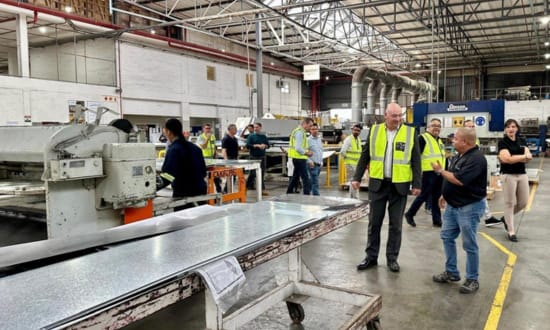
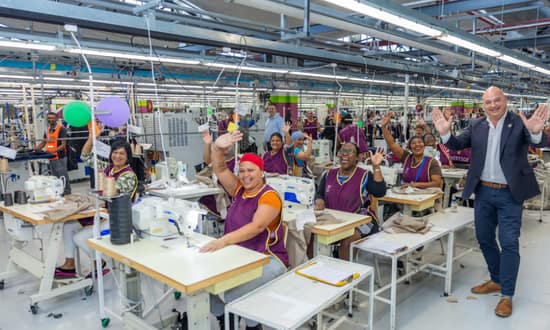
Cape Town has a meaningful comparative advantage in clothing and textiles, including strong design capability and a large employment base, with over 23,800 jobs in this sector. Cape Town’s clothing and textile industry is positioned as the third-largest employer in the city’s manufacturing sector.
A practical advantage here is the “vertically integrated value chain” enabled by proximity to major retailer head offices, with brands like Woolworths, Foschini Group, Truworths, PEP, and Cape Union Mart.
Where the investment opportunities are
- Fast fashion and shorter lead times, where local responsiveness beats long import cycles.
- Ethical and local production aligned to consumer preference shifts.
- Cluster-enabled productivity improvement, sustainability, skills development, and supplier development programmes (as described via the Cape Town clothing cluster ecosystem).
Considering advantages like CMT skills, port access that reduces import costs for inputs, and a supportive industry ecosystem, this is a sure investment opportunity for foreign investors who want to invest in Cape Town enterprises.
What to back
- Manufacturers with agile production lines and retailer integration.
- Sustainable textile innovation (recycled inputs, circular models, traceability).
- Capability upgrades that improve throughput and quality for export or premium local supply.
5) Green economy: Where infrastructure spend meets private sector growth
Cape Town’s green economy story is strategic and focused around specific investment avenues, with a City committed to carbon neutrality by 2050.
Cape Town’s green economy opportunities span renewable energy, water management, circular economy, green shipping, hydrogen technology, electric mobility, sustainable agriculture, and aviation.
Clustering signal: over 80% of South Africa’s green energy project developers are based in Cape Town, and the Zona Económica Especial de Atlantis is positioned as a major incentive-driven hub for green tech.
Renewable energy and enabling infrastructure
The Renewable Energy Independent Power Producer Procurement Programme (REI4P) is a large-scale investment opportunity (with a value above R200 billion) with procured renewable capacity through 2023, along with City-level investment aimed at mitigating load shedding.
Where the investment opportunities are
- Utility-scale renewable energy and grid support services
- Storage and energy management solutions
- Local manufacturing tied to green tech and SEZ incentives
Circular economy: Invest where waste becomes input
The circular economy in Cape Town is a core part of resilience-building. Programmes like the Western Cape Industrial Symbiosis Programme (WISP) facilitates industrial symbiosis (turning by-products and waste into inputs), and offers a key investment opportunity.
Cape Town circular innovations, such as Black Soldier Fly farming technologies that turns organic waste into protein and high-value additives (including for agriculture, cosmetics, and pharmaceuticals), plus community-driven recycling initiatives, offer foreign investors many opportunities.
Where the investment opportunities are
- Waste-to-value businesses (organic waste, packaging, industrial by-products)
- Recycling logistics and sorting infrastructure
- Circular manufacturing models supported by SEZ incentives and local demand
How to approach investment opportunities in Cape Town without risk
If you want to invest in Cape Town businesses and opportunities, our approach is a good guide:
- Start with sectors that are performing well. Many have clear pathways, lower barriers, and strong support structures.
- Choose an investment route that matches your appetite. Direct investment, early-stage, funds, joint ventures, greenfield, or growth-supporting real estate.
- Use the support that exists. Sector insights, regulatory guidance, introductions, trade and investment programmes, and expansion planning support are explicitly positioned as part of the local offer.
And if you’re a foreign investor and want to remove any risk or guesswork when assessing an investment opportunity, look for the basics: operating structures (local company, branch, partnership), predictable exchange control via the Reserve Bank, visa categories (business, corporate, critical skills, intra-company transfer), and incentives including sector-specific support and SEZ benefits (with Atlantis SEZ highlighted).
The investment opportunities are real, and it rewards focus
Cape Town’s investment case is strongest when you treat it like what it is: a city with multiple proven clusters, each with its own economics and operating realities.
The win is: pick the right sector play, match it to the right investment vehicle, and plug into the networks that reduce friction.
If you need assistance or information, please contact us.