Building an Economy of Hope and Confidence in Cape Town
Opinion Piece by Alderman James Vos
Mayoral Committee Member for Economic Growth
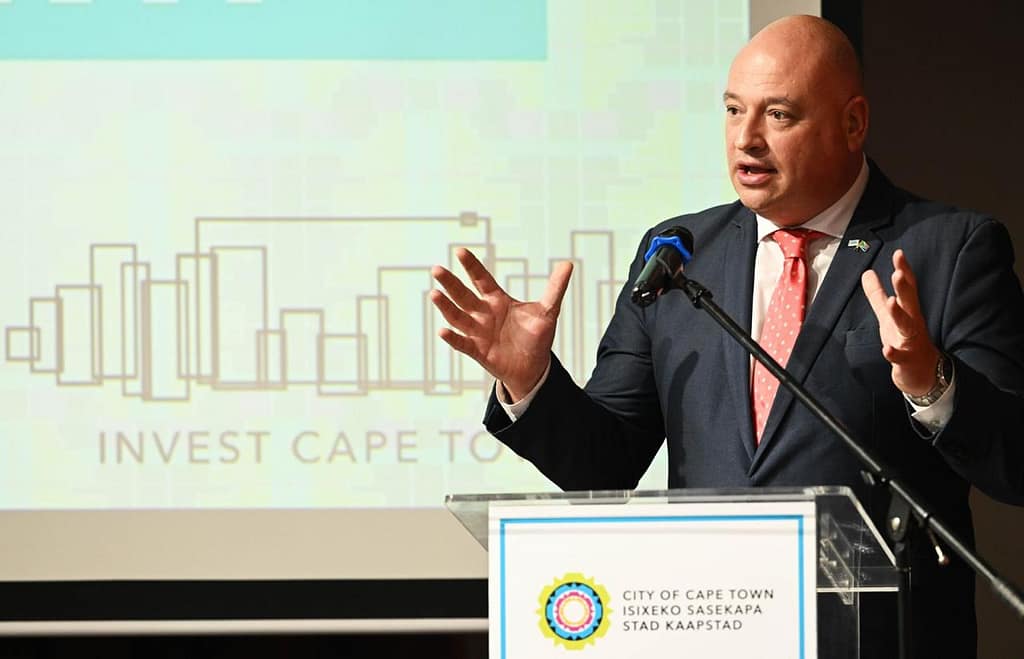
When people ask me what we are doing to support businesses in Cape Town, I think the most important place to start is with why we do this work.
I spend a lot of time visiting businesses across Cape Town, factories, workshops, offices, call centres and small enterprises, and speaking directly to the people running them. Those conversations influence a great deal of my work and thinking as Mayoral Committee Member for Economic Growth.
You quickly realise that entrepreneurs do not necessarily want government to run their businesses for them. They want government to work properly. They want faster, more predictable processes. They want access to markets and opportunities. They want practical help to improve productivity, become better suppliers, compete for contracts, find new customers and, when they are ready, export.
Ultimately, they want the space to get on with the business of doing business.
That thinking sits behind much of the work my team, our partners and I have been driving in Cape Town. I have always believed that government does not create most jobs, businesses do. Our responsibility is to listen to what businesses are telling us and create the conditions in which entrepreneurs and companies have the confidence to invest, grow and employ more people.
And there are encouraging signs that this approach is working.
According to the latest Stats SA data, 418 000 more people are employed in Cape Town than at the start of this local government term. That represents almost half of all net jobs added across South Africa’s eight metros over the period, while unemployment has fallen by around 5,5 percentage points over the term.
These are not numbers that any one person or programme can claim credit for. They are the product of businesses investing, entrepreneurs taking risks, people working hard and a city government focused on infrastructure, services and creating the conditions for economic growth.
There is still far too much unemployment, and therefore much more work ahead of us. But these results give us confidence that our direction is the right one.
That is why our ambition is to make Cape Town the easiest place to do business in Africa.
But that cannot simply be a slogan. It has to translate into programmes, policies, partnerships and measurable improvements that a business owner can actually experience.
Building practical support around the needs of businesses
One of our most important tools is the City’s Business Hub.
Through the Business Hub, we have deliberately built programmes around the different challenges businesses encounter as they grow. In 2025 alone, 5 816 businesses participated in Business Hub initiatives covering procurement readiness, supplier development, tender training, pricing and marketing, export readiness and market access.
The important point for me is that these are not generic interventions.
A small business trying to win its first major contract has different requirements from a manufacturer trying to increase output, and that manufacturer has different requirements from an established company preparing to enter an export market.
Our support therefore needs to meet businesses where they are.
That is why we offer programmes such as the High Impact Supplier Development Programme, which helps businesses strengthen areas including supply-chain integration, market positioning, financial growth, operational alignment and performance management.
We also support the Productivity Efficiency Programme because I have seen first-hand what productivity improvements can do for a business.
I wanted our team to make programmes like these available because productivity is not some abstract economic concept. If we can help a business reduce waste, improve workflow, manage stock better, increase output or unlock working capital, we can help that business become more profitable and competitive.
And a stronger business is better positioned to retain jobs, win new orders and employ more people.
That is the outcome that matters.
I am interested in what happens after the workshop. Did the business become more productive? Did it win a contract? Did turnover increase? Did it retain jobs? Did it employ somebody new?
That is the test.
Helping businesses find new customers beyond our borders
Helping a business become more productive is important, but ultimately that business also needs customers. That is why market access and export development are such important parts of our approach.
Through our partnership with Wesgro, we support the Cape Trade Portal, a digital marketplace designed to make it easier for Cape-based businesses to export and connect directly with international buyers.
Today, the platform connects 1 290 verified exporters offering more than 8 300 products and services with 761 registered international buyers across 80 countries.
For me, this is another practical example of what government’s role should be. We cannot sell a company’s product for them, but we can help open the door. The Portal gives exporters greater visibility to international buyers while connecting businesses with export resources, trade opportunities and practical support.
I want more Cape Town businesses to think beyond our borders. We make world-class products here, from food and beverages to clothing, technology, manufactured goods and marine products, and our job is to help more of those businesses find customers in markets they may otherwise struggle to reach.
The economic logic is straightforward: more customers mean more orders; more orders mean more production; and growing production creates the opportunity for more jobs.
That is why export development is not separate from our small-business strategy. It is part of it. We help businesses become stronger and more competitive and then, working with our partners, help connect them to markets where they can grow.
Why we needed a new Business Support Policy
This practical experience is also one of the reasons I pushed for the City to update its Business Support Policy.
Our previous policy dated back to 2018, and much has changed since then: how businesses sell and procure, the importance of digital platforms, the pressures facing small businesses and the need for faster, more coordinated government services.
I did not want us simply to dust off an old policy and continue doing things because that was how they had always been done. Together with our officials and industry partners, we wanted a policy that reflected what we were actually hearing from businesses.
For me, enterprise development comes down to three basic stages: help businesses set up, help them scale and help them access markets.
That is why the new Business Support Policy strengthens business-facing services, digital access, advisory support, procurement opportunities, workforce development, business-enabling infrastructure and coordination between the City and its partners.
Importantly, it was not developed behind a desk. We went through public participation and listened to businesses, industry organisations and economic-development practitioners.
Government should listen to the people who actually have to operate businesses.
The policy gives our team a stronger framework for the practical work already being delivered through the Business Hub while allowing us to expand and improve that support.
Because policy must ultimately lead to action. Otherwise, it is just another document.
Why manufacturing requires a different approach
The same thinking sits behind our Manufacturing Support Policy.
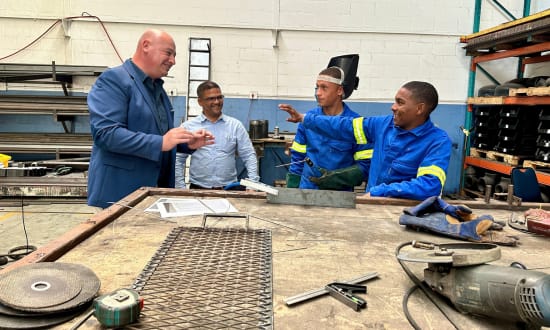
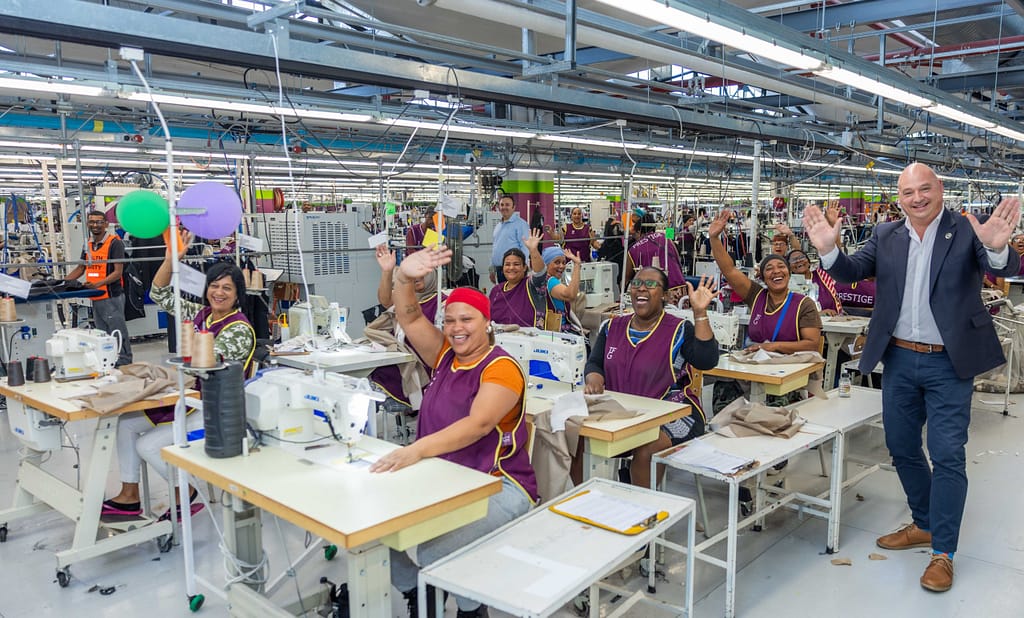
I spend a lot of time visiting factories because manufacturing gives you an immediate view of how an economy works.
Behind every production line are people: technicians, machine operators, designers, engineers and administrators. Around that factory are logistics companies, suppliers and service providers. And behind those jobs are families whose incomes depend on those businesses succeeding.
Manufacturing also has a powerful multiplier effect because a factory does not operate in isolation. It buys goods, uses transport and logistics, needs warehousing and professional services, and creates opportunities for smaller suppliers around it.
Our previous investment incentive framework focused on only six targeted industrial areas.
We wanted to think bigger.
The Manufacturing Support Policy now extends the City’s focus across all 33 industrial areas in Cape Town, while retaining financial measures that support faster development applications and broadening non-financial support.
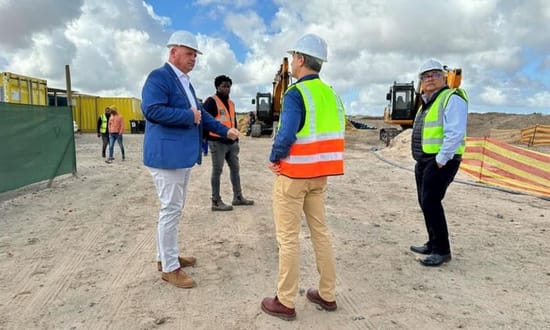
The objective is straightforward: if somebody wants to establish or expand a factory in Cape Town, we want the City to be part of making that investment happen rather than becoming another obstacle they have to navigate.
That connects directly to our Investment Facilitation Branch, which works with investors across municipal processes and helps coordinate what can otherwise become a complicated journey through different City departments.
This is why business support, manufacturing support, investment facilitation and ease of doing business must work as parts of the same system.
Jobs Connect – solving a problem we kept hearing about
But supporting businesses is only one side of the equation.
Something else kept coming up in our engagements.
Job seekers told us how difficult and expensive it was simply to look for work. Data costs money. Transport costs money. Printing CVs and travelling from one opportunity to another costs money, often for people who can least afford it.
At the same time, businesses were telling us: we need people, but we need help finding people with the right skills.
We needed to find a way of closing that gap.
So I tasked our team with developing a practical solution, and that became Jobs Connect.
The idea was simple: use technology to reduce the cost and difficulty of finding work while creating a platform through which employers can find suitable talent.
Jobs Connect is data-free on supported networks. People can register, build an employment profile, undergo literacy and numeracy assessments, receive CV guidance and access employment and education opportunities. For businesses, it provides a pool of assessed candidates and a more direct way of reaching people looking for work.
More than 200 000 Capetonians have now connected with Jobs Connect and its employment and education opportunities.
What I particularly like about Jobs Connect is that it demonstrates something I say often: innovation in government does not always have to be complicated.
Sometimes it is simply about identifying a practical problem and designing a practical solution around it.
I have joined our Jobs Connect teams at activations across many communities and watched young people build employment profiles and go through the assessment process. For me, that is where an economic strategy becomes real.
It is one thing to talk about jobs in a strategy document. It is another thing to help somebody get closer to one.
Growing the sectors where jobs can come from
Connecting people to opportunities only works if we are simultaneously growing the industries capable of creating those opportunities.
That is why our economic-growth approach is deliberately sector-focused.
One of the best examples is Business Process Outsourcing, or BPO.
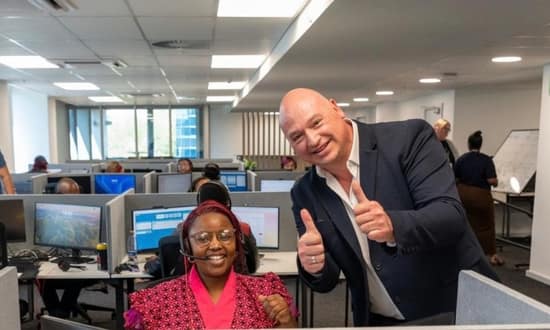
When we identified BPO as a major opportunity for Cape Town, our objective was not simply to say that Cape Town had a call-centre industry. We wanted to grow the industry, land more international operators and create jobs at scale for Capetonians.
Today, more than 100 000 people work in Cape Town’s call-centre industry, with around 70 000 servicing international clients and another 30 000 working in domestic operations.
In the 2025/26 financial year alone, the sector created a record 11 496 new jobs.
That is why our partnership with CapeBPO matters.
We work on both sides of the equation: promoting Cape Town internationally to attract and expand operators while investing in the local skills pipeline so that Capetonians are ready for those jobs.
As the sector grows, our interventions must grow with it. That is why we are now also investing in leadership development and building the next generation of team leaders and managers.
This is what sector development means to us.
It is not government choosing a fashionable industry and writing a strategy about it. It is identifying where Cape Town has a genuine competitive advantage, working alongside industry specialists, attracting investment, developing the skills pipeline and deliberately connecting that investment to employment opportunities.
Why we work through industry partnerships and SPVs
That brings me to another major part of our work: the City’s Special Purpose Vehicle, or SPV, programme.
I am a big believer in this model for a very simple reason: government does not have all the answers.
There are people working inside Cape Town’s industries every day who understand those sectors far better than government ever could.
They know where the skills shortages are. They know what investors are looking for and which international markets are opening. They understand supply chains and industry constraints, and they know what businesses need to become more competitive.
So instead of government pretending to be the expert in every industry, we partner with organisations that have that expertise.
We use these partnerships strategically in sectors where Cape Town has competitive advantages and real potential for investment and job creation, including BPO, technology, the green economy, clothing and textiles, the creative economy and marine manufacturing.
And importantly, we hold these partnerships to outcomes.
In the 2025/26 financial year, the City’s SPV partnerships contributed to 15 948 direct jobs and R18,9 billion in facilitated investment.
Those numbers help explain why I believe so strongly in this approach.
But the SPV model is about more than attracting large investments. It also allows us to get specialist support directly into smaller businesses.
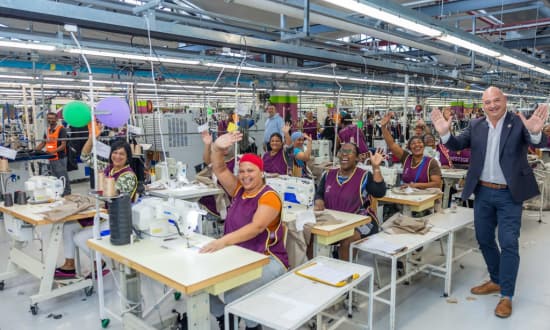
Through the Cape Clothing and Textile Cluster, for example, the City-funded Cape Acceler8 programme supports local manufacturers with practical interventions to improve competitiveness and secure new business.
And this is a sector with real economic muscle. In 2025, clothing and textiles contributed R17,6 billion to the Western Cape economy, with a R3,4 billion trade balance, while more than 140 million garments were produced right here in Cape Town.
This is why we back local industry. More orders mean more production. More production means more jobs.
Through GreenCape, businesses receive specialist support in areas such as the circular economy and green technologies.
Through UVU Africa, people are trained in digital and other in-demand skills while entrepreneurs and SMMEs receive industry-specific support.
And through CapeBPO, our partnership links skills development directly with one of Cape Town’s biggest employment sectors.
That is what we mean when we talk about being sector-focused.
We identify where Cape Town has an advantage. We work with specialists who understand that sector inside out. Together, we identify barriers to growth and deploy City resources in a targeted way to help overcome them.
Making government itself easier to do business with
There was another question we needed to confront.
We can have excellent business-support programmes, but what happens when that same entrepreneur needs a building plan approved, a land-use application processed, a wayleave issued, an electricity or water connection, or a business licence?
If those processes are slow and complicated, then government itself becomes part of the problem.
That is why we introduced the City’s Ease of Doing Business Index as a Mayoral Priority Programme.
We wanted to stop talking vaguely about “cutting red tape” and start measuring it.
The Index examines critical business-facing municipal processes, looking at the number of steps involved, how long they take and what they cost.
It covers land transactions and land-use rights, building plans, wayleaves, electricity and water connections, business licences, revenue clearances and informal-trading permits, with digitisation cutting across the system.
The principle is simple: measure it, publish it, identify the bottleneck, fix it and measure it again.
And importantly, we do not mark our own homework.
The Index is supported by direct feedback through our Business Satisfaction Survey. So we are not only asking what our internal systems tell us; we are asking businesses whether they actually notice the difference.
We have already seen what happens when teams across the City focus relentlessly on improving individual processes.
Wayleave processing, for example, has fallen dramatically from a baseline of around 40 days to an average of about six days. Building-plan processes have improved, business-licence processes have become faster, and we continue working across departments on those areas where performance still needs improvement.
I also wanted the results to be transparent.
That is why our performance is available on a live Ease of Doing Business dashboard on Invest Cape Town, where businesses can see the indicators for themselves.
The Index is not there so that we can congratulate ourselves. It is there to tell us where we are doing well, where we are falling short and what needs to be fixed next.
Because ultimately the question I keep asking is very simple:
Does the business owner notice the difference?
Creating an ecosystem, not another government programme
When you put all of this together, the bigger picture becomes clearer.
Jobs Connect, the Business Hub, our SPVs, the Business Support Policy, Manufacturing Support Policy, Investment Facilitation Branch and Ease of Doing Business Index are not separate projects.
They are different parts of the same economic-growth system.
A job seeker can use Jobs Connect to get closer to an opportunity. A small entrepreneur can receive practical support through the Business Hub. A manufacturer can participate in a productivity programme and become more competitive. An SMME can develop into a stronger supplier and win new contracts.
Our industry partners can tell us what their sectors actually need. Our Investment Facilitation team can help an investor navigate municipal processes. Our Ease of Doing Business Index can identify the government processes slowing that investment down. And our sector partnerships can help us attract the companies and investment that create the next round of jobs.
That is the ecosystem our Economic Growth team, colleagues across the City and our industry partners have been working to build.
I do not want us to measure business support simply by how many workshops we hosted or how many people sat in a training room.
Those numbers have their place, but they are not the end goal.
I want to know what happened afterwards.
Did the business become more productive? Did it secure another order? Did it enter another market? Did an investor choose Cape Town? Did somebody get trained for a real vacancy? Did somebody find work?
Connecting Cape Town to the world
Tourism sits at the heart of how we market Cape Town to the world and convert that global interest into economic opportunity and jobs.
I want our marketing to do more than generate beautiful images of our city. It must make people want to come here, stay longer, spend more and explore more of Cape Town.
That is exactly the thinking behind our This is Cape Town campaign, which has taken Cape Town into key markets around the world and generated more than 250 million impressions.
But marketing must always be backed by conversion.
That is why a favourite part of my job is working alongside our Cape Town Air Access partners to secure more routes and flights. From 1 November, we expect 255 international flights every week across 38 routes, connecting Cape Town with 33 destinations worldwide.
Every additional flight brings visitors, but it also opens new opportunities for trade, investment and business.
At the same time, my team and I are putting the final touches on our Tourism Strategy to 2030, where our ambition is to grow to 5 million visitors, R32,4 billion in visitor spend and 183 000 tourism-related jobs.
Those targets have a very practical purpose.
More visitors must mean more customers for our restaurants, attractions, tour operators, accommodation establishments and small businesses, and ultimately more jobs for Capetonians.
So the next chapter of tourism in Cape Town is about smarter marketing backed by conversion, stronger air connectivity, longer stays, higher visitor spend and spreading the benefits of tourism into more communities across our city.
Why this work ultimately matters
Whenever I visit a business, I try to look beyond the machinery, the product or the balance sheet.
I look at the people.
Every successful small business represents someone’s idea that became an income. Every new order gives a business owner a little more confidence to invest. Every productivity improvement can protect a job. Every new contract can create another one.
That is why my team and I are so focused on this work.
My job is not to tell entrepreneurs how to run their businesses. It is to make sure that, together with colleagues across the City, we are doing everything reasonably within our powers to give businesses the best possible environment in which to succeed.
That means better policies and practical programmes. It means cutting red tape, developing suppliers, improving productivity and helping businesses access markets. It means helping Cape Town businesses find new customers here and abroad. It means working with industry experts instead of believing government knows everything. It means facilitating investment, developing the skills businesses actually need and connecting Capetonians to opportunities.
Most importantly, it means constantly asking whether what we are doing is making a difference where it counts, inside businesses and in people’s lives.
The 418 000 net jobs added during this term and the roughly 5,5 percentage-point reduction in unemployment give us reason for confidence, but not complacency.
Too many Capetonians are still looking for work, and our task is to keep expanding opportunity.
That is why our approach remains straightforward:
Help businesses start. Help them become better businesses. Help them grow. Connect people to opportunities. Develop sectors that can create jobs at scale. Help businesses reach new markets. Make it easier to invest and operate. And make government itself work better for business.
None of this is the work of one person.
It takes dedicated City officials, colleagues across government, industry partners, entrepreneurs, investors, workers and communities pulling in the same direction.
Our job as a City government is to create the conditions for people and businesses to succeed, and to keep building an economy of hope and confidence in Cape Town.