The Attractive Magic of Cape Town
Cape Town’s position as a gateway to the African continent is strengthened by a thriving economy, good governance and top-notch infrastructure.
Cape Town’s established investment opportunities in agricultural and tourism industries, it’s diverse sector base, and a pool of young, innovative talent, Cape Town is a hub for creativity, inspiration, and business.
What makes it stand out compared to cities like New York or Singapore or elsewhere in Africa? It’s an inclusive, sustainable metropolis full of opportunity for global brands and local start-ups alike. Cape Town is South Africa’s second-largest urban economy, and the largest in the Western Cape. The economy grew by 1% in 2024 to R666 billion, with per capita GDP increasing to R135 000.


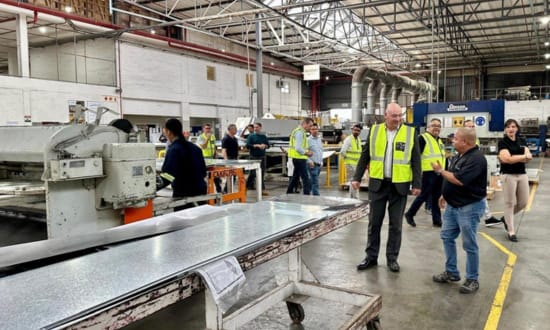
Cape Town has a diverse economy, driven by tertiary-sector activities. The top 12 industries account for 80% of economic activity. The top three sectors – real estate (R105 billion GVA), other business activities (R61 billion GVA), and finance (R62 billion GVA) – tower in their economic contribution, each contributing between 18% and 10% of total economic activity. Over half of formal employment is in five industries – wholesale and retail trade, government, manufacturing, administration, and financial services. Administration is a particularly fast-growing industry in Cape Town, with large increases in employment across call centres, employment agencies, other business support services, and security systems services. Manufacturing, despite external pressures, has grown in size over the past decade. This strategic positioning has established Cape Town as one of South Africa’s foremost business and investment hubs.
Current Economic Trends
Even though Cape Town typically accounts for around 10% of the employment rate in South Africa, it has contributed approximately 34% of the country’s total employment growth between the second quarter of 2022 and the second quarter of 2023.
Economic output and business expansion in the city has risen from R396,2 billion to R437,2 billion in constant prices with an additional 196 000 full-time equivalent (FTE) formal jobs being added (South African Regional eXplorer; SARS).

Cape Town’s economic growth surpasses the national average due to its competitive edge in key sectors. The city comprises leading industries that have been boosted by the foreign direct investment effect on economic growth, such as Business Services (22.5%) and Software and IT Services (21.3%), as well as manufacturing sub-sectors like electronic and electrical products. This strategic positioning has established Cape Town as one of South Africa’s foremost business and investment hubs.
Cape Town’s positive growth prospects include:
- Increased national economy share
- Increased new company registrations
- Large investment projects
- A growing aerospace sector
- Rapidly expanding B2B and B2C e-commerce
- Increased exports
- Improved trade balance
- Future economic trends
Future Economic Trends
The city is rapidly expanding its infrastructure and accessibility, making it a hub for growth and development. While business services, construction, retail, agro-processing, and tourism have been the driving forces behind employment growth so far, there are some exciting changes on the horizon. We have been at the forefront of the e-commerce revolution in South Africa, driving innovation throughout the e-commerce landscape – from the dedicated e-tailers to the supermarket chains based in Cape Town which have revolutionalised home deliveries, to the payment platforms and online systems that make this all possible.
Employment in Cape Town
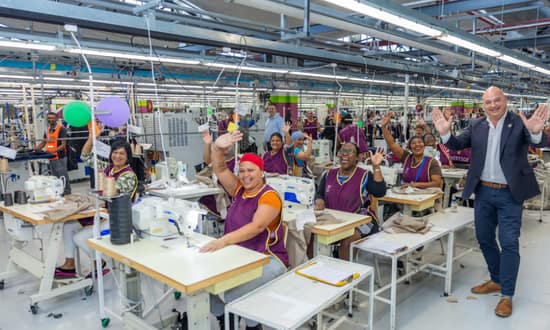
The constant innovation and ground-breaking advancements within various sectors has allowed for a space where businesses have access to top-tier talent and skills. The data show that Cape Town has the strongest labour market in South Africa, with 388 000 jobs added over the last five years.. Furthermore, foreign investment by well-established companies continues to boost the growing number of people who are employed in Cape Town.
The dynamic landscape across various sectors has paved the way for businesses to tap into a pool of exceptional talent and skillsets, formal jobs in Cape Town have grown by
22% since 2014, compared with 16% in the next closest metro. [CJ1.1]With foreign investment from established companies on the rise, the number of people employed in Cape Town is set to grow even further.

Cape Town’s Continued Economic Momentum
The province is experiencing a surge of growth in cutting-edge industries, including aerospace, information technology, telecommunications, medical and research equipment, and other hi-tech processes. This expansion is further broadening the already impressive industrial core of the city.
The city is also leading the charge for renewable energy and clean-tech industries. Several initiatives, including the designation of the Atlantis Green Tech SEZ and the founding of several renewable company head offices in the city, are paving the way for a sustainable future.
Cape Town’s ‘green’ reputation presents potential for the growth of an industry focusing on electric vehicle manufacturing and servicing, as well as medical cannabis production.
Continued economic momentum is further being cemented through:
- Sustainable growth in global trade partners
- National and local policy implementations
- Preservation of the natural environment
- Further investment in trade infrastructure
- Strengthening globally competitive sectors
- Evolving human resource skills development
- Growing information technologies
- Exploration of new global market opportunities

Cape Town is Africa’s Hub of Opportunity
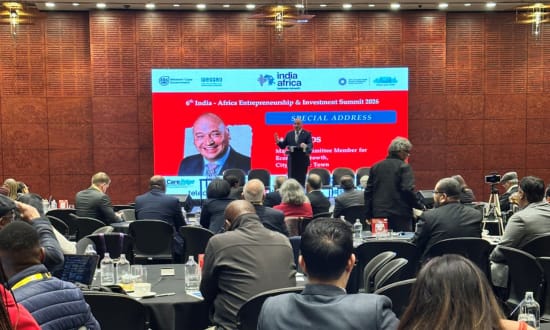
Cape Town ranks highly as an established business culture with trusted financial institutions. Furthermore, with the Cape Town International Convention Centre at its heart, this city is attracting foreign firms and new investment groups looking to tap into the local investment scene.
The Cape’s ever-growing film and media production industry not only attracts foreign audiences, but also boosts the city’s tourism economy. In addition to its beauty, Cape Town is also strategically positioned on the west coast of Africa, making it a powerful skills pipeline and the best place in Africa for hi-tech.
The city is rapidly transforming into a powerhouse in Africa’s financial landscape, claiming the prestigious position as the continent’s second-largest financial hub. This exceptional growth is largely fuelled by the burgeoning fintech sector, attracting an influx of foreign investors and tech innovators. The city has become a fertile ground for over 60 fintech start-ups, a testament to its vibrant tech ecosystem.
Related: Cape Town a Good Place to Invest?
Adding to its allure, Cape Town is also the chosen base for the top four accounting giants and numerous leading law firms, highlighting its status as a critical centre for business and finance. This union of technology, investment, and professional services makes Cape Town not just a scenic wonder, but a flourishing economic force on the African continent.
The soundness of banks in the region has been rated third in the world by the WEF, and the city offers good public transport linkages. With its large agricultural surroundings and position as a trade and retail hub for farming products, Cape Town is a blooming centre of industry and investment.
What next? You might find this interesting: How to Invest in Cape Town Businesses