Cape Town drives 50% of all new jobs growth across metros over last five years
Cape Town Mayor Geordin Hill-Lewis says the City added 418 000 jobs over the current local government term, more than the next four largest metros combined (Joburg, eThekwini, Tshwane and Ekurhuleni). Cape Town also has by far the lowest ‘broad’ unemployment rate, a full 11 percentage points lower than the next metro on this most holistic indicator which includes both the unemployed and those not actively job-searching. This is according to Statistics South Africa’s Quarterly Labour Force Survey data from Q1 2022 to the latest Q2 2026. Read more below:
Cape Town accounts for nearly 50% of all jobs added across the eight metros over the current term of office, adding 418 000 jobs out of the total 841 000 jobs growth in metros (StatsSA QLFS Q1 2022 – Q2 2026).
Compared to Gauteng metros, Cape Town added 6,4 jobs for every one job added in Joburg, and over four jobs for every one job added in Tshwane and Ekurhuleni.
‘There’s still plenty to do, but we are so encouraged by the 418 000 jobs added in our city over the current term. Cape Town is one of eight metros, but we are home to a full 50% of all new jobs across South Africa’s cities. This is no accident. This is what happens when you have a working city that focuses on better services for all and invests in infrastructure at record levels. Cape Town remains South Africa’s most successful, functional city where people are most likely to find a job and opportunities for a better life.
‘We’re especially happy for everyone who experienced the joy of finding work over the last five years. This is real progress in our mission to build a city of hope for all,’ said Mayor Hill-Lewis.

The Mayor said it was clear from the data that a growing number of people are finding work or actively job-searching, given that Cape Town’s labour force grew by 396 000 – nearly 70% more than its working-age population – over the current municipal term.
Cape Town’s growing job market activity is also evident in the eight percentage point drop in the city’s labour inactivity rate, which remains the lowest of all metros for this indicator of working-age people who are neither employed nor actively job-searching.
On the most holistic indicator of ‘broad’ unemployment rate – which includes both the unemployed and those not actively job-searching – Cape Town is a full 11 percentage points lower than the next metro, Buffalo City, and 13,5 percentage points lower than eThekwini, which has the lowest ‘narrow’ unemployment rate largely due to high numbers of people having given up looking for work.
‘This employment data is encouraging and shows that our economic growth approach is working. Over this term we have innovated to solve practical problems, whether that’s using the Ease-of-Doing Business Index to cut turnaround times and improve approvals, from construction permits to business licences, or helping more small businesses to set up and grow in Cape Town. We will gladly share our City’s experiences with other metros as we want to see all our metros succeed so that our country can succeed.
‘Ultimately, it’s about making it easier to do business, improving productivity and creating more opportunities for people to work. Seeing unemployment fall by around 5,5 percentage points during this term shows this practical approach is making a difference,’ said Alderman James Vos, the City’s Mayoral Committee Member for Economic Growth.

Infrastructure investment drove jobs growth
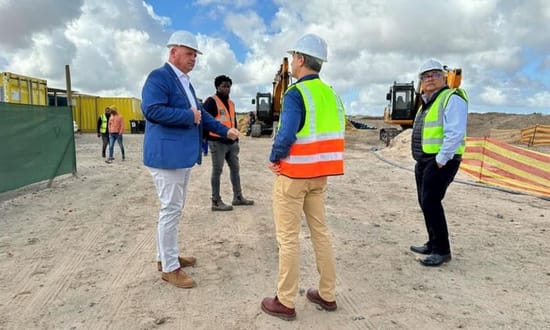
A total of 130 000 construction-related jobs are estimated to have flowed from Cape Town’s R40bn infrastructure investments in this term of office alone, aside from the broader economic benefits of improved infrastructure.
Cape Town achieved a South African-record R12,2bn capital expenditure in 2025/26, double the R6bn investment in the first year of the term.
Around 75% of Cape Town’s infrastructure investments directly benefit lower-income households according to City estimates.
Jobs added per metro Q1 2022 – Q2 2026
- Cape Town: +418 000 (49,6% of all metro jobs growth)
- eThekwini +142 000
- Tshwane: +102 000
- Ekurhuleni: +96 000
- Joburg: +65 000
- Buffalo City: +50 000
- NMB: +14 000
- Mangaung: -46 000
Broad unemployment rate per metro – Q2 2026*
- Cape Town 24,3%
- Buffalo City 35,3%
- eThekwini 37,8%
- Nelson Mandela Bay 38,1%
- Tshwane 38,8%
- Joburg 40,1%
- Mangaung 41,2%
- Ekurhuleni 42,7%
*The combined rate of unemployment and potential labour force (those not actively job-searching). Previously referred to by StatsSA as the ‘broad unemployment rate’.
Labour force inactivity rate – Q2 2026 (those not looking for work, lower = better)
- Cape Town 28,7%
- Joburg 30,7%
- Buffalo City 33%
- Tshwane 33,2%
- Ekurhuleni 35,5%
- Nelson Mandela Bay 39,5%
- eThekwini 40,5%
- Mangaung 40,6%
CAPTION 1: Mayor Hil-Lewis and Alderman Vos promoting the City’s Jobs Connect programme to youth at the I-Can Centre in Elsies River.
CAPTION 2: Mayor Hill-Lewis and Alderman Vos at the BPO training centre in Athlone, which supports the call centre industry now employing more than 100 000 Capetonians.