Invest in Cape Town
Want to invest in Cape Town? You’re at the right place. Cape Town offers so much more than breathtaking scenery, iconic Table Mountain, and global tourist appeal. For international investors from the USA, UK, Germany, Netherlands, and Africa, the question is no longer whether Cape Town is worth investing in, but how best to take advantage of the wealth of opportunities it presents.
Named “Best City in the World” for seven years running, Cape Town offers a dynamic, future-focused city that has positioned itself as one of Africa’s most compelling destinations for business.
This paper takes an honest look at the concerns global investors often raise about investing in South Africa and Cape Town, and provides well-evidenced responses that show why the city remains one of Africa’s most competitive choices. Explore what incentives are available, and which sectors are worth exploring right now.
Skip ahead: Explore key investment opportunities in Cape Town
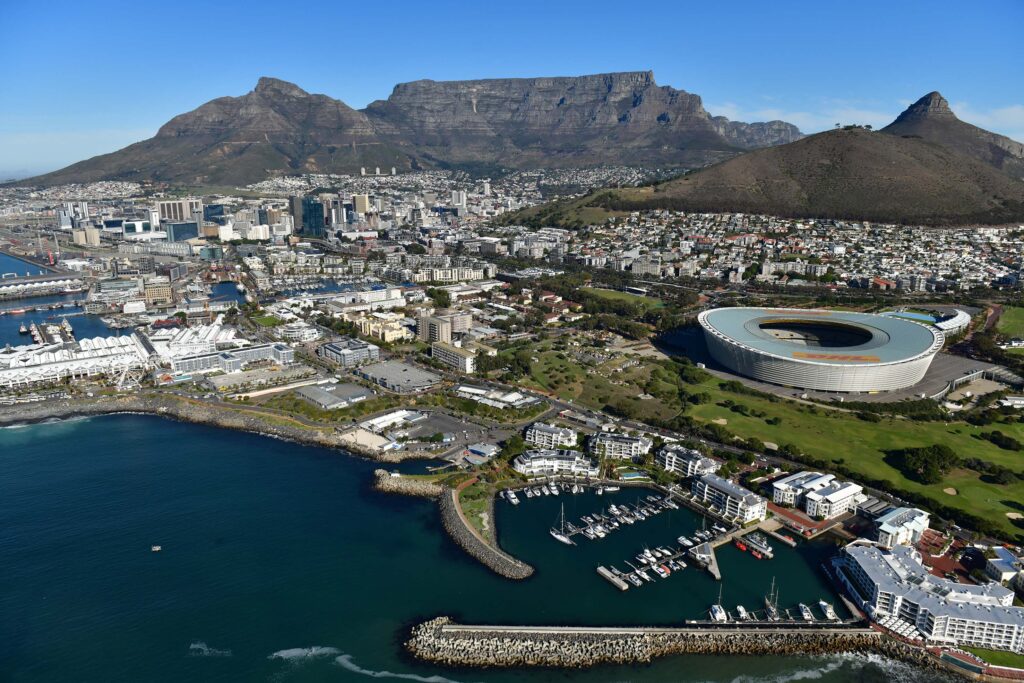
Is Cape Town a Good Place to Invest?
Yes. Cape Town consistently emerges as a standout performer. It ranks among Africa’s top cities for foreign direct investment and has built a reputation for stability, resilience, and forward-thinking strategies.
Long-term growth
Cape Town’s strong infrastructure, innovative industries, and robust education system make it not just a good place to invest but one of the best-positioned cities for long-term growth on the continent. This is why investing in Cape Town is widely regarded as the safest, most lucrative city to invest in. Innovative industries and the robust education system make it not just a good place to invest but one of the best-positioned cities for long-term growth on the continent. This is why investing in Cape Town is widely regarded as the safest, most lucrative city to invest in.
Exceptional talent and skills
Known as the innovation capital of Africa, it is a hub for a wide skills base in financial services, advanced manufacturing, renewable energy, and IT innovation, and home to some of Africa’s brightest minds, with some of the continent’s strongest universities.
International companies move to Cape Town
Global companies such as Amazon, Johnson & Johnson, and Lufthansa have already established a significant footprint here, demonstrating Cape Town’s viability as a global business hub.
Investment in local industries
Local industries that range from steel fabrication and food manufacturing to clothing production and green energy continue to attract growing attention from investors looking for sustainable, long-term growth.
Mining in South Africa is a key contributor to the economy, and mining in the Western Cape plays a role. One of the standout mining-assets in the Western Cape is the Steenkampskraal rare earth elements (REE) mine, which has one of the highest grade rare earth deposits in the world. The City of Cape Town is a mere 40-minute drive from there.
Steel production and fabrication in the Western Cape
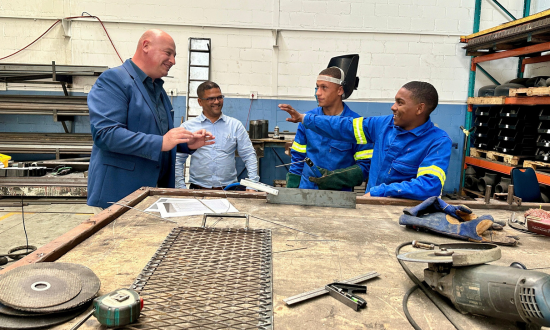
South Africa’s steel industry remains a substantial sector with capacity to produce about 10 million tonnes per year, and provides critical inputs for infrastructure, construction, automotive, and machinery. In Kuils River, Cape Town specifically, steel production and metals fabrication have been growing with focused international investments in foundry work, sheet and structural metals, and downstream machining.
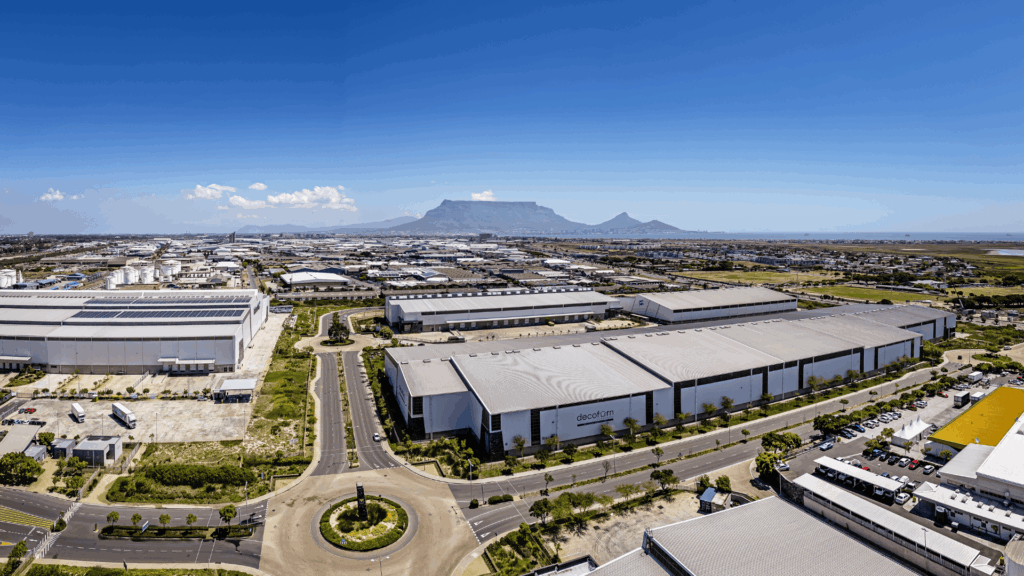
How Cape Town Overcomes South African Challenges
Every market comes with challenges, and South Africa is no exception. But what matters most for international investors is how those challenges are being managed and what the long-term prospects look like. Many international businesses arrive with similar concerns, ranging from energy supply to regulatory frameworks. Yet, in almost every case, Cape Town rises above and demonstrates resilience, innovation, and opportunity.
Political and Regulatory Stability
South Africa’s national policy landscape can sometimes appear unpredictable. Issues such as land reform, labour law, and shifts in economic policy have created hesitation in the past.
However, Cape Town and the broader Western Cape region distinguish themselves through consistent and proven good governance, better policy stability, and proactive investor support.
The City has also invested in red-tape reduction initiatives via The Business Hub, and has established Special Economic Zones (SEZs) that provide clarity, tax benefits, and smoother regulatory pathways for businesses. The City has also initiated the Ease of Doing Business programme to establish Cape Town as Africa’s most business-friendly destination. South Africa’s legal system is also one of the strongest in emerging markets, ensuring enforceable contracts and well-tested investor protection frameworks.
Sustained Energy Reliability
Energy security is perhaps the most widely reported concern, particularly given South Africa’s history of load shedding. For many international businesses, reliable electricity supply is non-negotiable. Yet this is precisely where Cape Town has taken bold action.
Cape Town is at the forefront of South Africa’s renewable energy transition, investing heavily in solar, wind, and independent power generation. .
This proactive approach has also opened doors for new investment in green energy projects, a sector where global demand for sustainability is growing rapidly.
Free download: The 2050 Energy Strategy for the City of Cape Town
Economic Opportunity and Stability
The volatility of the rand can make investors cautious. Fluctuations against major currencies like the US dollar, pound, or euro pose potential risks to returns. However, this same volatility also presents entry opportunities at highly competitive valuations compared to developed markets. South Africa’s financial sector provides sophisticated hedging instruments, enabling investors to manage exposure effectively.
Moreover, many Cape-based industries, such as agribusiness, wine exports, and IT services, generate earnings in stronger foreign currencies, which mitigates the risks posed by local fluctuations.
Download latest Economic Performance Indicator Reports here

Efficient Infrastructure and Logistics
The efficiency of transport and logistics is a critical factor in international investment decisions. Cape Town’s port and rail infrastructure have faced challenges. Yet ongoing public-private partnerships and reforms are improving turnaround times and operational efficiency.
Cape Town also offers world-class air connectivity, with direct links to 40 destinations in 20 countries, including major European and Middle Eastern cities, making it a natural hub for both trade and people. For exporters of wine, fresh produce, or manufactured goods, Cape Town’s positioning offers unrivalled access to global markets, particularly into Europe and North America.
Local Skills and Tech Talent
The question about whether Cape Town has enough skilled talent to support international business operations is easily answered. The city is home to a remarkable concentration of universities, technical colleges, and innovation hubs. Institutions like the University of Cape Town (UCT), Stellenbosch University, University of the Western Cape, and Cape Peninsula University of Technology produce thousands of graduates annually in critical fields such as engineering, IT, and business sciences.
Cape Town also hosts one of , often referred to as “Silicon Cape”, which nurtures innovation and ensures a steady pipeline of skilled professionals. For businesses that require high-level problem-solving and innovation, Cape Town has repeatedly proven itself as a talent-rich city.
FDI Incentives for Foreign Investors in Cape Town
The city and national government have developed a range of incentives to ensure foreign investors are supported. These include tax benefits under SEZ programmes, customs relief for , and targeted incentives for renewable energy projects. Grants are also available for skills development, R&D, and export promotion, providing businesses with critical support in scaling operations.
Importantly, Cape Town’s local government has a reputation for cutting red tape and actively supporting investors. This hands-on approach makes it significantly easier for businesses to establish themselves and begin operations without facing unnecessary delays.
Business Investment Opportunities in Cape Town
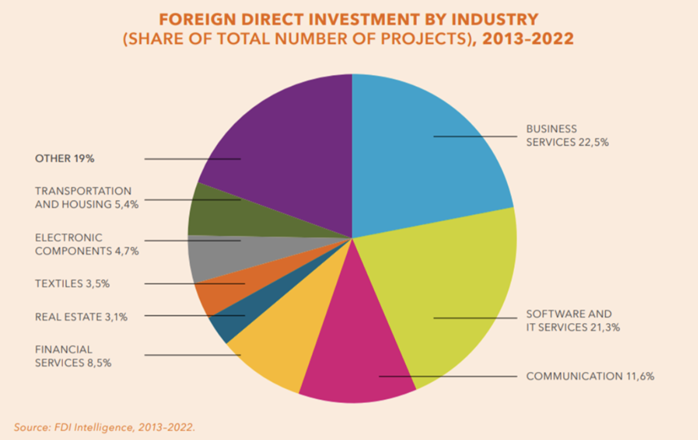
What sets Cape Town apart is the sheer range of opportunities available. Investors looking at green energy will find a rapidly expanding sector supported by municipal and national policy. The IT sector continues to thrive, fuelled by a strong startup culture and global connectivity. Manufacturing opportunities remain robust in clothing, steel fabrication, and food processing, while tourism and hospitality remain evergreen industries.
Real estate and logistics are fast-growing areas, especially with the rise of e-commerce and retail expansion. Cape Town’s strategic port access, international airport, and position within African trade corridors make it a natural centre for logistics investment.
Here’s a closer look at some of the many investment opportunities available.
Film and Media
Cape Town has grown into a global film and media production hub where investors are drawn by its stunning locations, competitive facilities like Cape Town Film Studios, and a steady stream of domestic and international productions.
The city’s Film Cape Town initiative has helped formalise support and infrastructure, and the sector contributed around R5 billion annually and over 35,000 jobs in recent years. If you invest in this sector, you benefit from strong local skills, diverse landscapes, favourable regulatory partnerships, and increasing international demand
Explore Cape Town Film and Media investment opportunities

FinTech
Cape Town’s fintech ecosystem is vibrant and expanding, with more than 200 companies operating across payments, lending, insurance technology, B2B financial tools, financial planning, and remittances. When you invest in Cape Town fintech, you tap into a market hungry for innovation, supported by tech hubs, legal frameworks that are evolving, and a local population increasingly using digital financial services.
The sector is well placed to serve not just South Africa but the broader SADC region, putting your investment in a strategic gateway.
Explore Fintech investment opportunities in Cape Town
Gaming and Animation
With over 50% of South Africa’s game development studios based in Cape Town, the city is also a leader in animation and new media. For those who invest in gaming and creative tech here, there’s opportunity in both original content creation and outsourcing (animation, design and art services) thanks to competitive costs, diverse skill sets, and growing global demand.
Cape Town’s “creative economy” is becoming a magnet for storytellers and digital creators seeking stable production bases with artistic flair.
Discover Gaming and Animation investment opportunities in Cape Town
Clean Energy and Green Economy
Cape Town is pushing hard on clean energy: solar, wind, and independent power producers (IPPs), as well as energy efficiency, water resilience, and related infrastructure. Investors who choose to invest here will find policy support (e.g., SEZs like the Atlantis Green Tech SEZ), growing public/private collaborations, and increasing demand for sustainable solutions. The green economy in Cape Town is rapidly becoming foundational, with significant return potential.
Explore Green Economy and Clean Energy investment opportunities in the Western Cape
Agricultural Opportunities
Outside the city’s aesthetic advantages lies rich agricultural surrounding regions; Cape Town is a hub for processing, export, and innovation in agri-tech, food value chains, and water-smart farming.
If you invest in agri-business here, you’re well positioned to leverage Cape Town’s port infrastructure, logistics networks, and the growing global market for high-quality produce, wine, and speciality foods. There’s also increasing support for sustainable farming, food safety, and export-oriented growth.
Discover Agricultural investment opportunities in Cape Town here

Informal Economy and Creative Informal Sectors
Cape Town’s informal economy which includes small-scale design, crafts, digital creators, local media, represents both a social force and untapped business potential. With recent reports citing over
Not to mention accessing vast human creativity, stimulating job growth, and leveraging local cultural heritage to produce goods/services that resonate both locally and abroad. With support programmes and incubators being developed, the informal creative sector is becoming more formalised and scalable.
Explore Informal Economy investment opportunities in Cape Town
EdTech Investment Opportunities
Cape Town is becoming an emerging hub for educational technology solutions that address access, upskilling, and digital learning, especially with a strong base of universities, private training institutions, and a youthful population. Investors who invest in EdTech here can benefit from demand for hybrid learning, remote education, digital skills, and localised content, supported by institutional partnerships and a market that values innovation in education.
Review EdTech investment opportunities in the Western Cape
Electronics Manufacturing
Cape Town’s electronics sector is growing, especially in design, assembly, and value-add manufacturing tied to both consumer goods and industrial components. To invest in electronics in Cape Town is to take advantage of relatively lower labour and overhead costs, access to regional supply chains, and increasing digital infrastructure. There is also room for investors to bring in advanced manufacturing, R&D, and export-scale operations.
Discover Electronics Manufacturing investment opportunities here
Food & Beverage Manufacturing
Anchored by a strong culinary tradition, access to fresh agricultural inputs, and Cape Town’s reputation for premium food and wine, the food and beverage sector offers real opportunity.
When you invest here, you can build processing, packaging, branded exports, and niche or artisanal food products aimed at both domestic market and international demand. The infrastructure for cold-chain logistics, port exports, and tourism linkages further boosts returns.
Explore Food & Beverage Manufacturing investment opportunities in Cape Town

Clothing & Textiles Business Opportunities
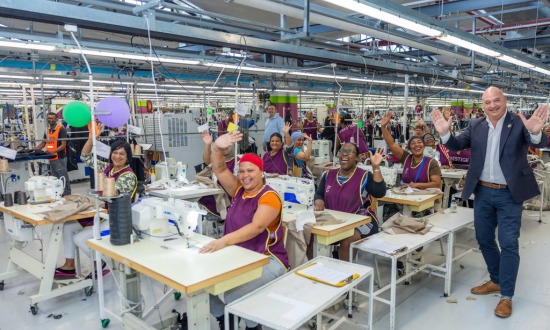
Cape Town’s clothing & textiles industry is a blend of design heritage, skilled craftsmanship, and increasing innovation (e.g. sustainable materials, ethical manufacturing). Investors who invest in this sector can harness Cape Town’s access to textile-friendly trade routes, growing consumer markets, and support from government and industry bodies to produce for export or contracted domestic retail.
There is also growing interest globally in ethical, locally-made garments, something Cape Town manufacturers are particularly well-placed to deliver.
Here are Cape Town’s Clothing and Textile Manufacturing investment opportunities
How to Invest in Cape Town
Investing in Cape Town is not a one-size-fits-all process. There are multiple entry points, each suited to different investor profiles. Some investors choose to establish greenfield projects, building new facilities in manufacturing, IT, or renewable energy. Others prefer joint ventures and partnerships with established South African companies, particularly in sectors like textiles, steel, and agribusiness, where local knowledge is invaluable.
Cape Town also presents significant opportunities in venture capital and private equity, especially given its thriving tech startup ecosystem. Many foreign investors have already taken equity positions in fintech and agritech companies headquartered in the city. Real estate investment is another growing area, with demand for logistics parks, warehousing, and industrial facilities on the rise as e-commerce continues to expand.
South Africa’s financial markets provide a formal channel for investing in Cape-based companies through the Johannesburg Stock Exchange (JSE). Meanwhile, government and city-level agencies play an active role in facilitating investment, providing assistance with site selection, incentives, and operational guidance.
Ready to invest in Cape Town? Visit the Invest One Stop Shop initiative.
How Cape Town Compares to Other African Investment Destinations
Africa is not a monolith, and investors often weigh Cape Town against other major destinations such as Nairobi, Lagos, Cairo, or Johannesburg. Each has strengths, but Cape Town consistently stands out for its blend of innovation, governance, and lifestyle appeal. For example:
- Nairobi: Cape Town offers more advanced financial services, infrastructure, and regulatory frameworks, which can be crucial for large-scale investment.
- Lagos: Cape Town presents a more stable and lower-risk environment, particularly when it comes to governance and operational predictability.
- Cairo: Cape Town balances scale with stability and ease of doing business, making it a more practical choice for many sectors.
- Johannesburg: Cape Town is proving increasingly competitive, particularly in tech, renewable energy, and creative industries, where lifestyle and innovation ecosystems are critical.

Invest in Cape Town Today. Invest in Africa’s Gateway.
Cape Town is the gateway to Africa. For investors from the USA, UK, Germany, Netherlands, Kenya, China, Nigeria, and beyond, it represents an opportunity to engage with Africa in a city that balances opportunity with resilience, lifestyle with governance, and innovation with tradition.
From Amazon’s global-scale operations to homegrown manufacturing industries, Cape Town demonstrates daily that it can deliver on investment promises. With a strong pipeline of talent, a proactive green energy strategy, and a growing international reputation, the city stands as one of the most compelling investment destinations anywhere in Africa.
For those who want not only financial returns but also a foothold in Africa’s growth story, the answer is clear: Invest in Cape Town.
Need advice? Let’s talk.
FAQs
Are foreigners allowed to invest in Cape Town?
Yes. South Africa has an open investment environment, and foreign investors are welcome to establish businesses, acquire assets, or enter into joint ventures in Cape Town. There are no restrictions on foreign ownership in most sectors, and international investors enjoy the same legal protections as local businesses. Ready to explore your options?
Why is Cape Town a good place for foreign investors to invest?
Cape Town combines strong governance, a skilled talent pool, and a thriving innovation ecosystem with access to global markets through its port and international airport. The city is a leader in renewable energy, ICT, food manufacturing, and creative industries, making it one of Africa’s most competitive and resilient destinations. Discover sector-specific opportunities here.
What sectors offer the best investment opportunities in Cape Town?
Cape Town is a leader in renewable energy, information technology, food and beverage manufacturing, clothing and textiles, and steel fabrication. The city’s growing logistics and real estate markets also make it an attractive hub for distribution and warehousing. Explore which sector best fits your strategy. Enquire with Invest Cape Town.
How do I start the process of investing in Cape Town?
The process is straightforward: you can set up a new entity, acquire an existing business, or partner with a local company. Invest Cape Town, along with Wesgro, provides hands-on support with site selection, incentives, permits, and introductions to key stakeholders. Start your investment journey today. Contact Invest Cape Town.
Do I need a local partner to invest in Cape Town?
No. Foreign investors are not required to have a local partner and may own businesses outright. That said, many international companies choose to partner with local firms to leverage market insights, networks, and compliance expertise. Find the right entry model for your business. Enquire with Invest Cape Town.
What is the minimum capital required for foreign investors to invest in Cape Town?
There is no fixed minimum capital requirement, as it depends on the sector and business model. While large-scale investments often involve significant capital, Cape Town’s diverse economy also supports smaller-scale ventures and startups seeking international partnerships. Learn about capital options tailored to your sector. Speak to Invest Cape Town.